If only you were a narwhal.
22.95 ₾


If only you were a narwhal.
№129958
Created: Yesterday
Created: Yesterday

Address:
Tbilisi
Nietzsche believed that animals do not experience pleasure and pain as deeply as we do because they lack intelligence. Nietzsche’s life teaches us that thinking too deeply is not always beneficial.
As Nietzsche said, humans, unlike animals, must believe that their existence has a purpose, but such a view brings nothing but misery. Animals do not need to draw causal conclusions because they have the power of associative learning - for example, pigeons are better radiologists thanks to their ability to associative learning.
What is intelligence? What is good about human intelligence? What would have happened if Nietzsche had been a simpler animal? What would have happened if he had not been able to contemplate the essence of existence? Is our mind the ultimate achievement of evolution? In answering these and other questions, scientist Justin Gregg argues that all animals have consciousness and subjective experience; they perceive time and make plans for the future, even if those plans span a few seconds.
Subscribe on Telegram
№129958
Created: Yesterday
Created: Yesterday

Similar ads
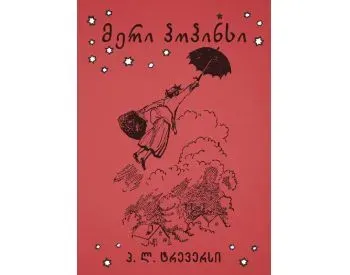
Mary Poppins
Tbilisi
If you still don't know anything about Mary Poppins, then congratulations - you have before you a...
Yesterday
“Mathematics Tests Grade 2 - Part 2” is a school material created by a team of practicing...
Yesterday

English Tests Grade 3 is a collection designed for primary school students. The collection...
Yesterday

English tests 4th grade
Tbilisi
The collection of tests is intended for primary school students and is designed for all four...
Yesterday

Agatha Morton and her friend Hector Perrot are now involved in the investigation of a brutal...
Yesterday

English tests 5th grade
Tbilisi
The collection of tests is intended for primary school students and is designed for all four...
Yesterday

English tests 6th grade
Tbilisi
The collection of tests is intended for primary school students and is designed for all four...
Yesterday
"Mathematics Tests Grade 4 - Part 2" is a collection prepared by a team of practicing teachers.
Tbilisi
“Mathematics Tests Grade 4 - Part 2” is a collection prepared by a team of practicing teachers,...
Yesterday
The collection "Mathematics Tests 1st Grade - Part 2" aims to strengthen students' knowledge.
Tbilisi
The collection “Mathematics Tests 1st Grade - Part 2” aims to strengthen students’ knowledge and...
Yesterday
Math Tests Grade 3 - Part 2
Tbilisi
A team of practicing teachers worked on the collection, which made it tailored to the needs of a...
Yesterday

The vagabonds of Dharma
Tbilisi
Growing up in Oregon, I didn’t feel American at all. I was alien to provincial ideals, to...
Yesterday

The Mysterious Life of Birds
Tbilisi
The novel “The Secret Life of Bees” by American writer Sue Monk Kidd was published in 2002 and...
Yesterday