

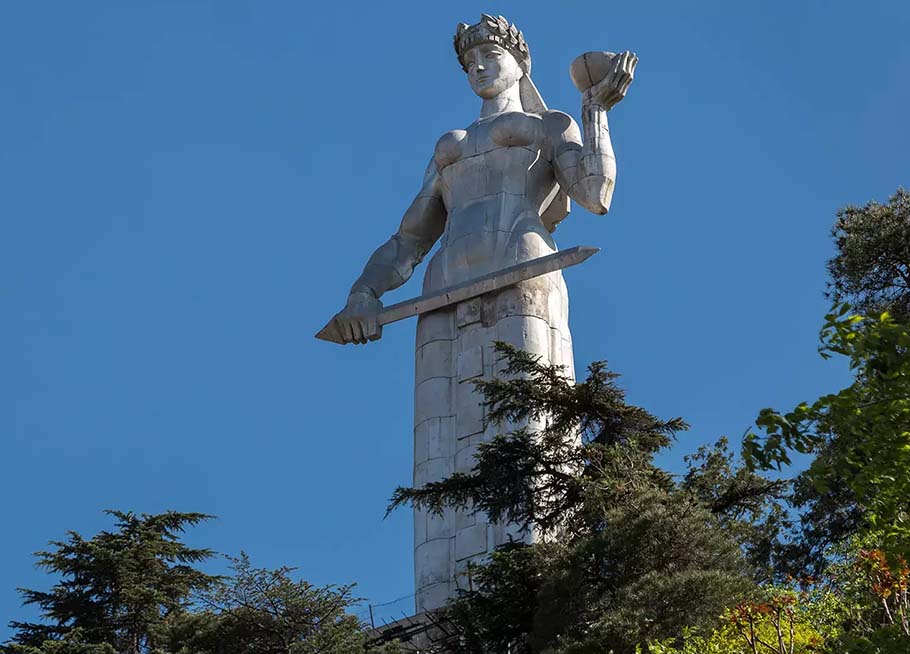
The Mother of Kartli monument is the capital’s most recognizable statue, often listed in guidebooks as Mother of Georgia or simply the “Mother of Georgia statue.” It’s more than a postcard image: the 20-meter figure on the Sololaki ridge greets visitors and sees off locals, reminding everyone of the Georgian character. Below is everything a traveler needs: the essentials, how to get there, when to come, what the symbolism means, and why the visit is worth it.
At a glance
What it is: an aluminum statue of a woman in national dress — a bowl of wine for friends, a sword for enemies. In Russian-language materials you’ll see variants like: Mother of Georgia in Tbilisi, Tbilisi monument Mother of Georgia, Mother of Georgia monument.
Where it is: on the Sololaki ridge next to Narikala Fortress; panoramic views over the Old Town and the Kura (Mtkvari) River. Quickest way up: the Rike–Narikala cable car to the upper station, then a 3–5 minute walk along the ridge.
When to come: near sunset — the best light for a sculptural silhouette; mornings offer cleaner air and crisper distant views. Why go: for the city’s emblem and honest viewpoints that fit “Tbilisi in one frame.”
Creation story: a jubilee and a city’s voice
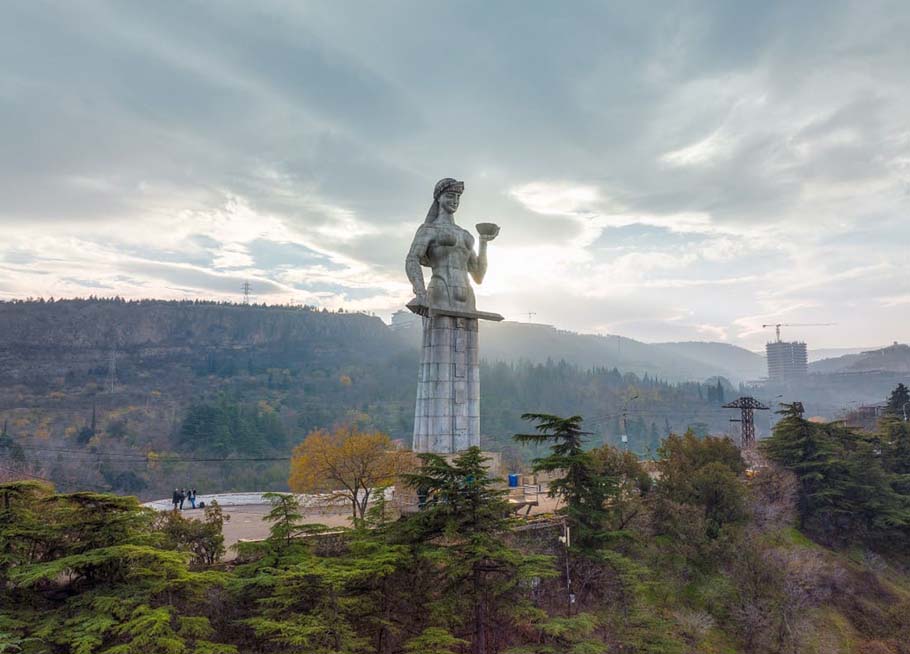
The statue was unveiled in 1958 for Tbilisi’s 1,500th anniversary. The author is sculptor Elguja Amashukeli. Instead of traditional figures of rulers or allegories of victory, he chose the archetype of a mother — universally readable and aligned with the city’s tone: warmth, dignity, and readiness to defend home.
The structure was later reinforced and updated: in the 1960s the statue received an aluminum cladding for a seamless silhouette, and in 1997 a major reconstruction preserved its proportions and character. That’s why the “Mother of Kartli” looks fresh in modern photos, even though its “passport age” goes back to the mid-20th century.
Gradually the monument became both a visual landmark and an “emotional marker” of the city. From many points in Old Tbilisi you’ll spot her profile — and instantly read where the fortress, Rike Park and the river lie.
Symbolism: the bowl and the sword
The iconography is clear. In the left hand — a bowl of wine for those who come in peace: generosity and hospitality. In the right — a sword that reminds: home is defended. This simple duality made the image timeless: it speaks equally about welcome and strength of character.
The choice of aluminum was deliberate: it catches light, outlines the form, and keeps the silhouette readable even on overcast days. At sunset the surfaces warm up, contrast grows, and the monument seems to float above the Old Town’s roofline.
Don’t be confused by naming in guidebooks — Mother of Kartli, Mother of Georgia, “Mother Georgia monument,” “Motherland Mother Georgia” (a colloquial borrowing). All point to the same Tbilisi symbol.
Where it is and how to get there
Rike–Narikala cable car. The most spectacular way: a few minutes in the cabin and you’re on the ridge. From the upper station to the “Mother of Georgia statue” viewing area it’s a short signed walk. Pros: fast, no steep ascent, instant views. Cons: queues in high season and occasional wind stoppages.
On foot from the Old Town. If you’re near Narikala or Abanotubani (the sulfur baths), climb the Sololaki ridge: the trail is short, but there’s gravel and stones in places — wear sensible shoes. Along the way you’ll get excellent angles over the city.
Taxi to the upper Sololaki streets. You can ride closer to the lookout and walk the final meters. Handy if you’re aiming for sunset and don’t want to gamble with timing.
Best time for photos
The “golden hour” is ideal: low warm light enhances relief, adds depth to contours, and the city below dissolves into a soft haze. Morning suits those who value a clean horizon and quiet platforms without crowds.
For a full-height “portrait,” stand at the base and step back 8–12 meters: the sword and bowl will line up in one plane without perspective distortion. For a panorama, move toward the Narikala walls — you’ll capture the Kura, Rike Park and the Bridge of Peace, with the “Tbilisi monument Mother of Georgia” as a strong accent.
Shooting on a phone? Lock exposure on the sky and lift shadows slightly — aluminum won’t blow out and volume will remain. In the evening, account for Old Town lights: they add points of brightness and raise contrast.
Practical visiting tips
The ridge is exposed and windy: even in summer bring a light windbreaker; in winter, gloves. In season, water helps — it runs out faster up top than you think. Shoes: no heels, decent tread — viewing areas can be gravelly.
It gets busy by day: tour groups arrive in waves from the cable car. For calm shooting come earlier or shift to adjacent points along the ridge. The view is just as good — with fewer people.
After sunset, wait 10–20 minutes: the sky keeps a blue backdrop while the city lights up — prime time for contrasty silhouettes and postcard panoramas.
Facts and specs
Year unveiled: 1958 (for Tbilisi’s 1,500th anniversary). Author: Elguja Amashukeli. Material: aluminum; major updates in the 1960s and in 1997.
Height: about 20 meters. Location: Sololaki ridge, next to Narikala Fortress and the trail to the Botanical Garden.
Names across sources: “Mother of Kartli,” “Mother of Georgia,” “Mother of Georgia monument,” “Mother Georgia statue.” All refer to the same landmark — the city’s symbol.
Naming it right: Mother of Kartli, Mother of Georgia, “Motherland Mother Georgia”
The official, historically rooted name is Mother of Kartli (Kartlis Deda). In travel content, Mother of Georgia is also common — a valid synonym. The phrase “Motherland Mother Georgia” is a colloquial carry-over; you’ll meet it in blogs and social media. The meaning stays the same: a feminine image symbolizing hospitality and strength.
If you run a travel site or place card, it’s practical to list both — “Mother of Kartli (Mother of Georgia)” — so users find the landmark by any popular query.
For maps and navigation, the forms Kartlis Deda, Mother of Georgia and “Мать Картли” (Cyrillic) all work well — include them in metadata.
One-hour route: what to combine nearby
The classic sequence: cable car from Rike Park → lookout at the “Mother of Georgia in Tbilisi” monument → Narikala walls → descent to the sulfur baths and the Old Town. In an hour you’ll collect Tbilisi’s “postcard set.”
If you have more time, add the Botanical Garden: a few minutes from the fortress — shade, small waterfalls and views of the Sololaki ridge. The contrast of two moods in one visit works perfectly.
Architecture fans should return to the Bridge of Peace and Rike Park at twilight: glass and metal form a beautiful lattice of lights, while the statue remains the dominant above the slope.
FAQ
Where is “Mother of Kartli” and what’s the fastest way up?
On the Sololaki ridge next to Narikala. The quickest and most scenic route is the Rike–Narikala cable car to the upper station, then a 3–5 minute signed walk along the ridge to the viewing area.
Who created the “Mother of Georgia” monument and when?
By sculptor Elguja Amashukeli. Unveiled in 1958 for the city’s jubilee; later the structure was updated while preserving the original image and proportions.
What do the bowl and sword on the “Mother of Georgia” statue mean?
The bowl of wine welcomes friends; the sword signals readiness to defend home from foes. This duality succinctly describes the character of the city.