

Makhuntseti Waterfall is one of Adjara’s most accessible nature spots. It sits in the village of Makhuntseti (Keda municipality) along the Adjaristskali River. From Batumi the drive takes about 45–60 minutes: roughly 30–33 km of mountain road, and the last short stretch is an easy walk on boardwalks. The location works well for a self-guided half-day trip and is often included in one-day routes.
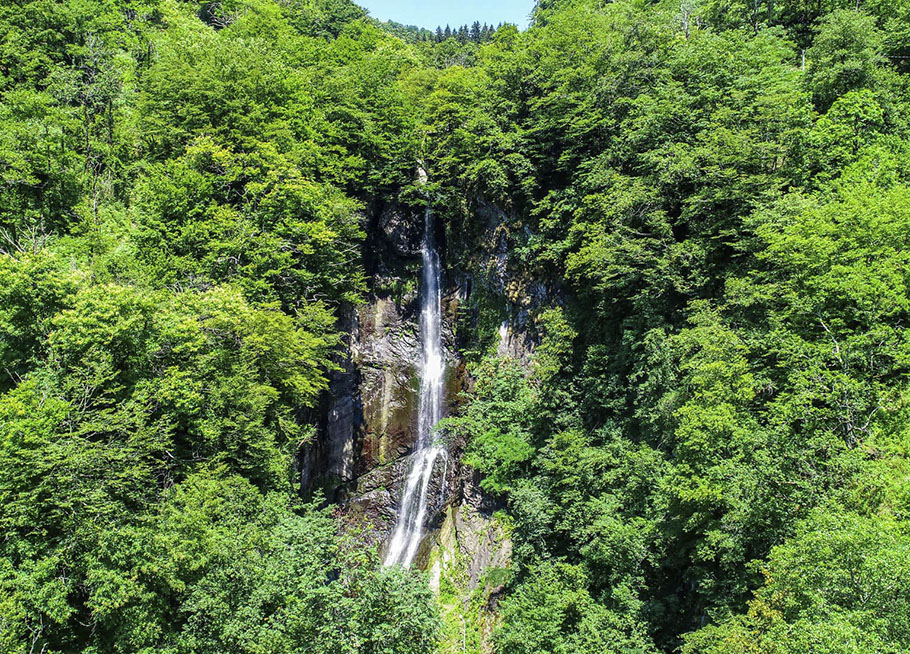
Where the waterfall is located: quick facts
Makhuntseti lies in Adjara’s hill country, up the valley from Batumi. The road follows the river, so scenery changes quickly: forest ribbons, rock slopes and narrow bridges. Wayfinding is straightforward—follow signs toward Keda municipality; at the site you’ll find boardwalks and viewing platforms.
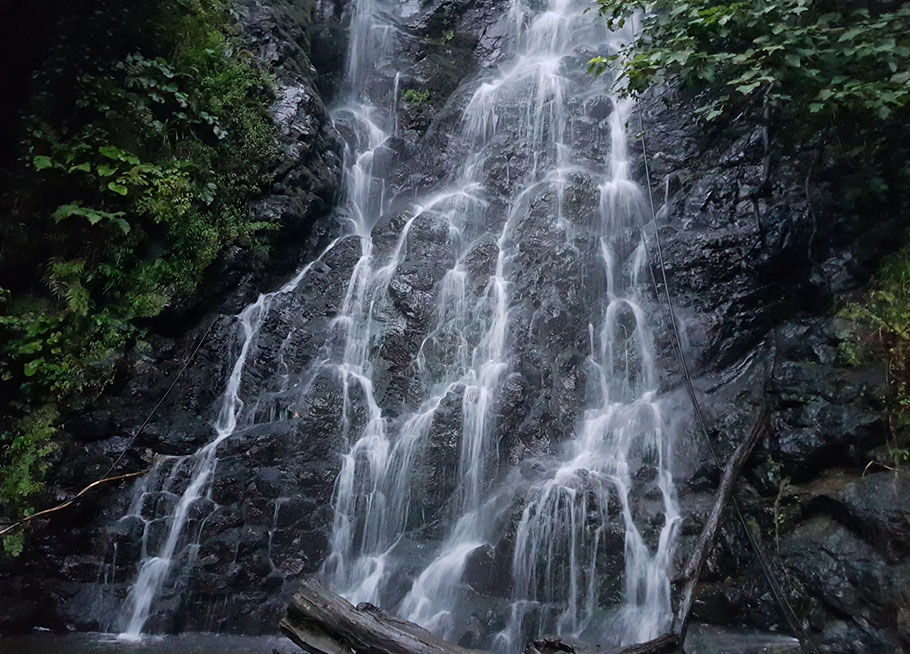
Guidebooks list slightly different heights—usually around 30–36 meters—because of measurement methods. Practically, think “tall vertical drop with a fine spray at the base.” In dry weather the water looks harder and more contrasty; after rain the flow grows wider and more textured, with stronger spray near the edge.
Within a short walk of the parking area stands a stone arch bridge commonly called the “Queen Tamar Bridge.” It doesn’t shift focus away from the waterfall, but it pairs nicely with the visit: many travelers first step onto the arch over the river, then descend to the pool via the boardwalks.
Route from Batumi by public transport
The budget way is by minibus toward Keda/Khulo (sometimes with a change). Travel time depends on traffic and stops—around 50 minutes. Exact to-the-minute schedules are rare: in high season departures are more frequent, in shoulder season intervals grow. Leave early to have ample time for viewing and photos.
The final short segment is often easiest by a brief taxi ride: it’s just a few minutes and inexpensive, and you avoid walking on the road with camera gear. For a small group, sharing a taxi can cost roughly the same as additional bus fares.
Plan to return before dark: after 6–7 pm services thin out and driving mountain switchbacks in the dark is less comfortable. If you expect to linger at the water, check the last departure in advance or book a transfer.
Route by car: road and parking
From central Batumi, drive up the Adjaristskali valley toward Keda. The first kilometers are city streets, then the road climbs into the hills: it’s narrow in places with tight bends and short ascents. In dry weather allow 45–60 minutes; in rain or roadworks add some buffer.
Parking by the entrance is compact and fills quickly in peak season. Nearby private lots may be available—fees vary, so carry some cash. From your spot, it’s a few minutes on a marked path to the viewing boardwalks.
In winter and early spring, shaded sections can be damp and slick. If traveling in the off-season, check tire pressure and pack spare footwear—changing into dry shoes after the boardwalks is a small luxury.
When to go: season and time of day
Late spring, summer and early autumn offer the most predictable conditions: even light, saturated greens and safer approaches near the water. In winter the site is quieter and more intimate, but spray is cold and some boardwalks can be wet—move slowly and dress warmly.
For the best experience, arrive early morning or near sunset. Mornings bring softer light and fewer people; pre-sunset hours add warm tones and textured shadows. Midday suits a quick look, but contrast is higher and glare stronger.
If you want lunch in the valley too, try: morning at the waterfall → midday break → a short second photo session closer to sunset. You’ll dodge peak tour waves and collect shots with different moods.
Water safety: what matters
Rocks near the pool are slippery even in dry weather—especially after rain. Wear shoes with good tread and keep a safe distance from the vertical drop: eddies and uneven footing are common beneath the fall. Keep children on the boardwalks and under close supervision.
Swimming isn’t prohibited, but it’s entirely at your own risk. Don’t go under the main plume, don’t jump from boulders, and don’t leave gear at the water’s edge—spray and gusts carry farther than expected. Use a splash cover or dry bag for cameras and phones.
When shooting long exposures, give others space: don’t plant a tripod in the water and don’t block the trail. On narrow sections, yield to oncoming visitors—everyone’s day stays safer and calmer.
Photo tips
For silky water texture, overcast days and early mornings are your friends: dynamic range is easier to manage and glare is lower. In strong sun, a circular polarizer helps tame reflections and deepen surrounding greens.
Long exposures work best with a tripod on a firm platform, not on wet boulders near the edge. If you lack an ND filter, use base ISO and stop down the aperture to lengthen exposure without clipping highlights. Keep a microfiber cloth handy—spray on the front element ruins sharpness fast.
When it’s crowded at the pool, shift position: step higher along the boardwalks or slightly sideways to hide people behind natural occluders (rock, shrubs). A few steps can yield a cleaner composition without retouching.
Trip preparation: what to take and when to leave
A little prep saves time on site and helps you return with the shots you wanted. The list below is a practical minimum for any season—adjust to weather and plans.
- Light wind/rain shell and shoes with good grip.
- Splash cover for phone/camera, microfiber cloth, and if possible a CPL/ND filter.
- Cash for parking/cafés, drinking water, a small snack.
- Best departure from Batumi: before 9:00. Plan A: morning visit; Plan B: a short second session near sunset.
If traveling with kids or seniors, budget extra time for slow sections and breaks. In a party of 3–4, split roles: one watches bags, one shoots, one tracks timing and the route back.
FAQ
How do I get to Makhuntseti from Batumi?
By public transport: minibus toward Keda/Khulo (about 50 minutes), then a short taxi if needed. By car: roughly 30–33 km and 45–60 minutes depending on weather and traffic. Parking is compact and fills quickly in peak season.
Is there an entrance fee and parking?
Entrance is typically free. Private parking nearby can be paid—carry some cash. It’s a short walk from the lot to the boardwalks.
Can you swim at the waterfall?
Swimming isn’t prohibited, but it’s at your own risk. Strong spray and eddies occur near the drop, with slippery, rocky footing. Keep a safe distance and don’t stand under the falling water.